

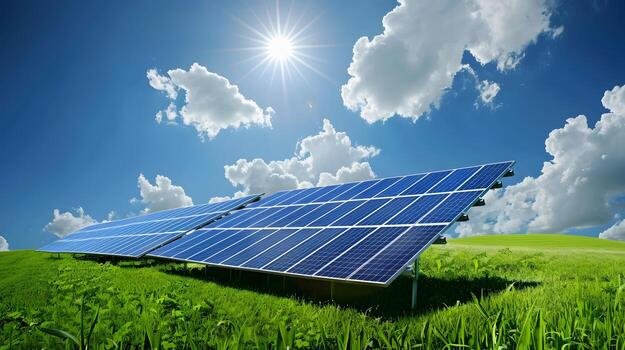
The Solar Revolution Just Hit Warp Speed
If you have been waiting to switch to solar because you thought the technology hadn’t “peaked” yet, your wait is officially over.
This week, at the Global Clean Energy Summit in Kyoto, a consortium of major manufacturers confirmed what industry insiders have been whispering about for months: Commercial-grade Perovskite-Silicon Tandem panels have officially stabilized and are entering mass production with an efficiency rating of over 35%.
For the past 20 years, we’ve been inching forward with standard silicon panels hovering between 19% and 22% efficiency. Today, the game has fundamentally changed. Here is everything you need to know about the biggest solar news of 2025.
1. The “Tandem” Takeover
For decades, panels were made of a single layer of silicon. The problem? Silicon is only good at absorbing red light waves. It lets high-energy blue light waves pass right through or turn into waste heat.
The new 2026 model panels (shipping this month) utilize Tandem Cell Technology. They layer a synthetic material called Perovskite on top of traditional silicon.
-
The Perovskite layer catches the blue spectrum.
-
The Silicon layer catches the red spectrum.
The Result: A standard residential roof that used to generate 6kW of power can now generate nearly 9kW in the same amount of space, without requiring a larger footprint. For homeowners with small roofs or partial shading, this is the miracle cure we’ve been waiting for.
2. The “Durability Dilemma” is Solved
The only reason we didn’t have these panels in 2023 or 2024 was durability. Early Perovskite degraded quickly in rain and humidity.
However, the major announcement this December is the development of “Self-Healing Encapsulation.” Manufacturers have developed a glass-glass sealing technique that protects these sensitive layers for a guaranteed 30 years. This puts the lifespan of these high-efficiency panels on par with the rugged silicon panels of the past.
3. Solar Windows are Finally Clear (Literally)
While the Tandem panels are grabbing headlines for efficiency, the “invisible” solar market has quietly matured.
This month, major architectural firms announced that Transparent Photovoltaic Glass is now price-competitive with standard triple-pane windows. In 2024, these windows had a slight orange or blue tint. The Dec 2025 update? They are virtually indistinguishable from standard glass to the human eye.
This means skyscrapers being built in 2026 will essentially be vertical power plants, harvesting energy not just from the roof, but from thousands of square feet of glass siding.
4. Price Update: Efficiency Up, Soft Costs Down
You might think higher tech means higher prices. Surprisingly, the total cost of installation is dropping.
Why? Power density.
Because these new panels are so powerful, you need fewer of them to run a house.
-
Fewer panels mean less racking equipment.
-
Less wiring.
-
fewer labor hours on the roof.
While the per panel price is higher than the old tech, the total system cost for a 100% offset system has dropped by roughly 15% compared to December 2024 prices.
What This Means for Homeowners in 2026
If you install solar in the coming year, you are no longer buying “alternative” energy. You are buying the most efficient power source on the planet.
With the release of the 35% efficiency commercial panels and the integration of solid-state home batteries (which became the standard earlier this year), the concept of the “Grid-Independent Home” is no longer a survivalist fantasy—it is a standard suburban reality.
The verdict? The sun is shining brighter than ever on the solar industry.