
The Backbone of a Reliable Solar Power Plant
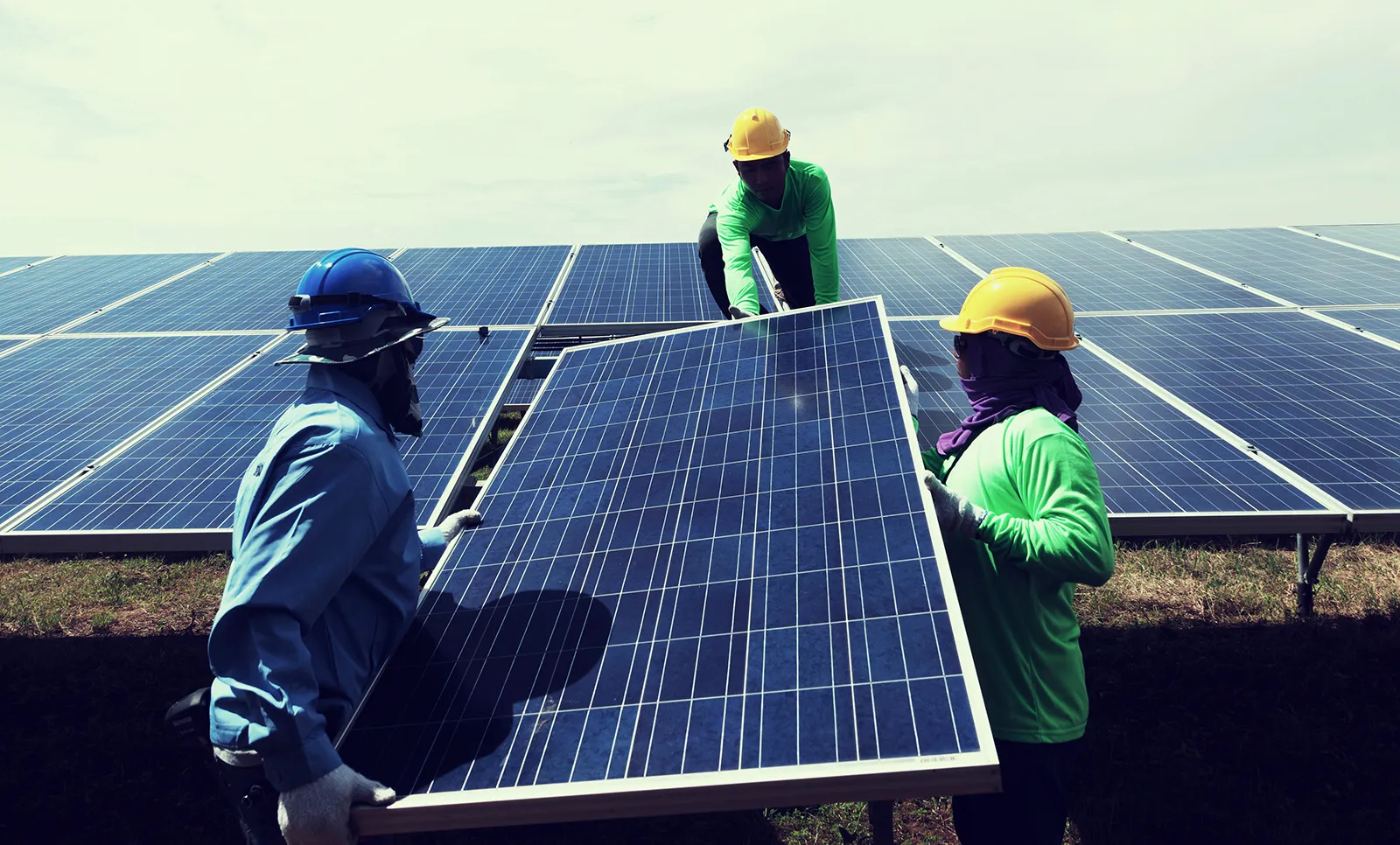
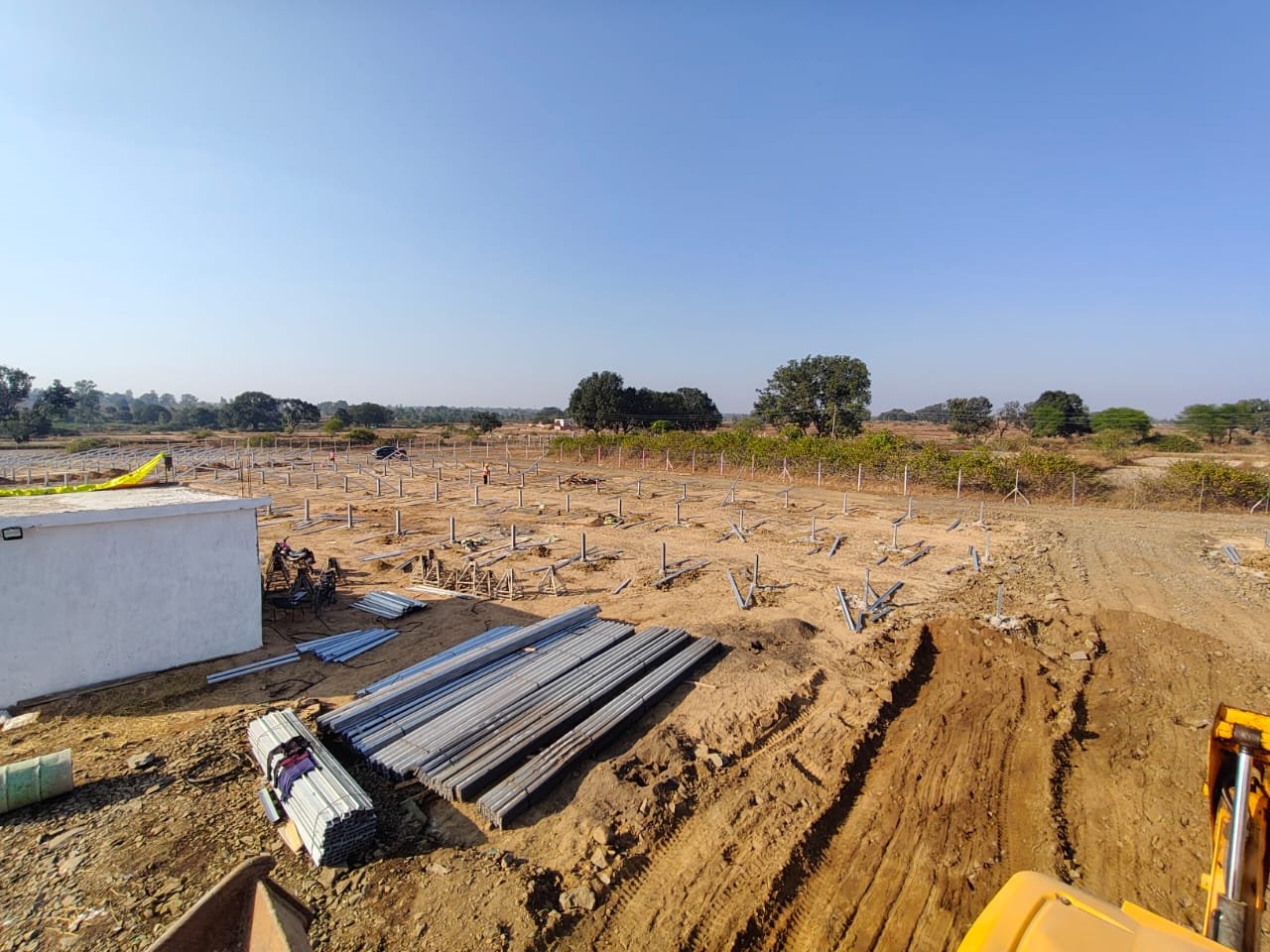
In a utility-scale or rooftop solar power plant, the success of power generation does not depend only on solar modules and inverters. Two of the most critical groundwork activities—MMS (Module Mounting Structure) installation and cable trenching work—form the backbone of a safe, durable, and efficient solar plant. Proper execution of these activities ensures long-term structural stability, electrical safety, and optimized plant performance.
Importance of MMS Structure Installation
The Module Mounting Structure (MMS) is the foundation on which solar modules are installed. A well-designed and accurately installed MMS ensures maximum energy generation, resistance against environmental loads, and long operational life.
Key Objectives of MMS Installation
-
Strong mechanical support for solar modules
-
Accurate tilt and orientation for maximum solar irradiation
-
Resistance to wind load, corrosion, and seismic activity
-
Long-term durability with minimal maintenance
MMS Structure Installation Process
1. Site Survey & Layout Marking
Before installation, a detailed site survey is conducted. Layout marking is done as per approved GA drawings to maintain row spacing, module pitch, and alignment accuracy.
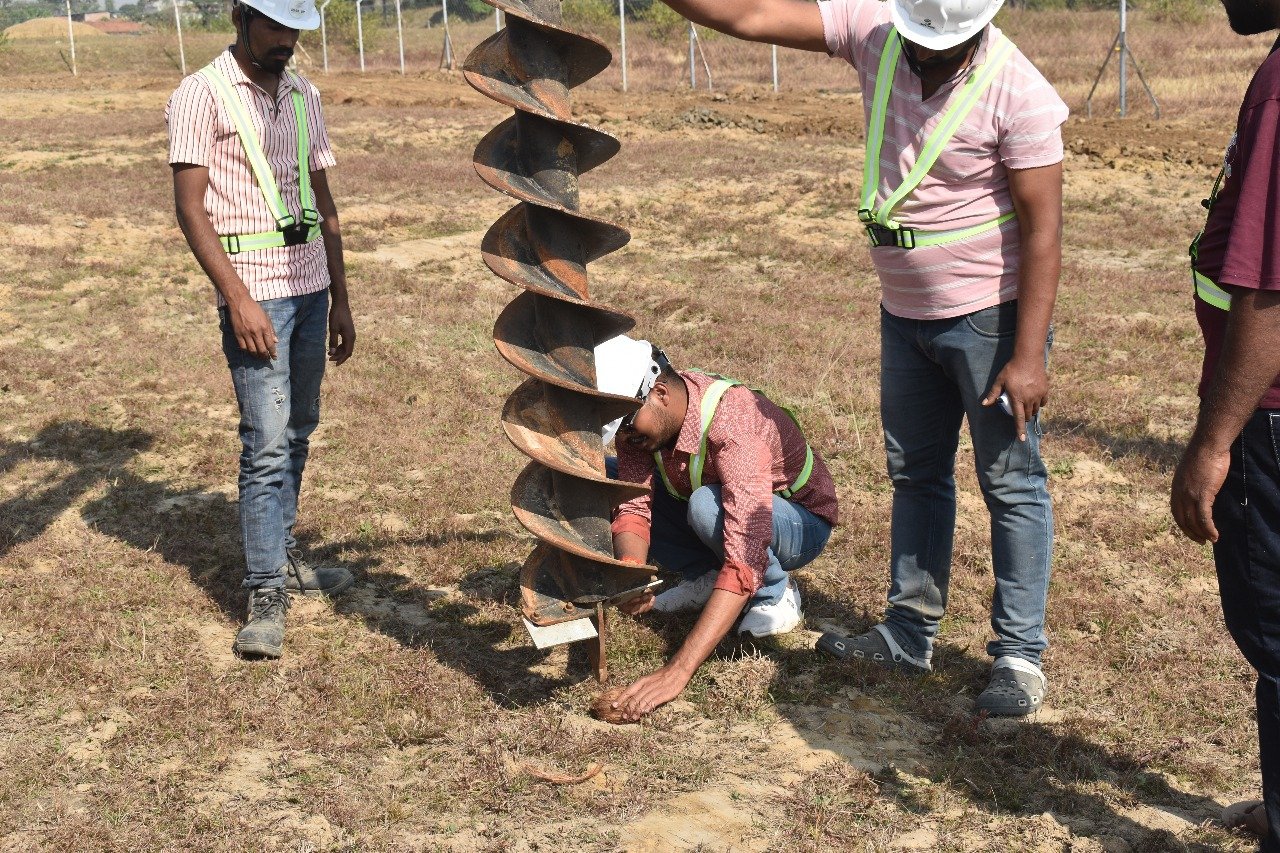
2. Foundation / Pile Installation
Depending on soil conditions and design, foundations may include:
-
Pile driving
-
Micro piling
-
RCC foundations
All foundations are checked for verticality, depth, and strength.
3. Structure Erection
After foundation readiness:
-
Columns, rafters, purlins, and bracings are installed
-
Proper torque tightening is ensured using calibrated torque wrenches
-
Degree alignment and leveling are verified
4. Quality & Safety Checks
-
Bolt torque verification
-
Structural alignment inspection
-
Corrosion protection checks (GI/HDG coating)
-
Compliance with design and safety standards
Cable Trenching Work in Solar Power Plants
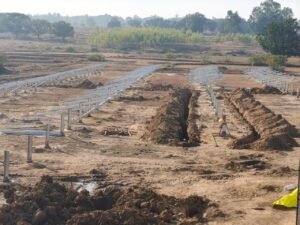
Cable trenching is a crucial civil and electrical activity that ensures safe routing of DC, AC, and communication cables across the plant.
Purpose of Cable Trenching
-
Protect underground cables from mechanical damage
-
Ensure safe power transmission
-
Maintain organized and accessible cable routing
-
Enhance plant safety and aesthetics
Cable Trenching Execution Process
1. Trench Excavation
-
Trenches are excavated as per approved route drawings
-
Depth and width maintained according to cable size and voltage level
-
Trench bottoms are cleaned and leveled
2. Sand Bedding & Cable Laying
-
Fine sand bedding is laid to protect cable insulation
-
Cables are laid carefully without bending stress
-
Proper spacing is maintained between multiple cables
3. Cable Protection & Identification
-
Protective covers (bricks, concrete slabs, or cable tiles) are placed
-
Warning tapes are installed above cables
-
Cable markers and route identification provided
4. Backfilling & Compaction
-
Trenches are backfilled with soft soil
-
Mechanical or manual compaction is done
-
Surface restoration is completed
Best Practices for MMS & Trenching Work
-
Use approved drawings and specifications
-
Follow IS standards and project safety guidelines
-
Ensure trained manpower and proper tools
-
Maintain documentation for quality control
-
Conduct regular inspections during execution