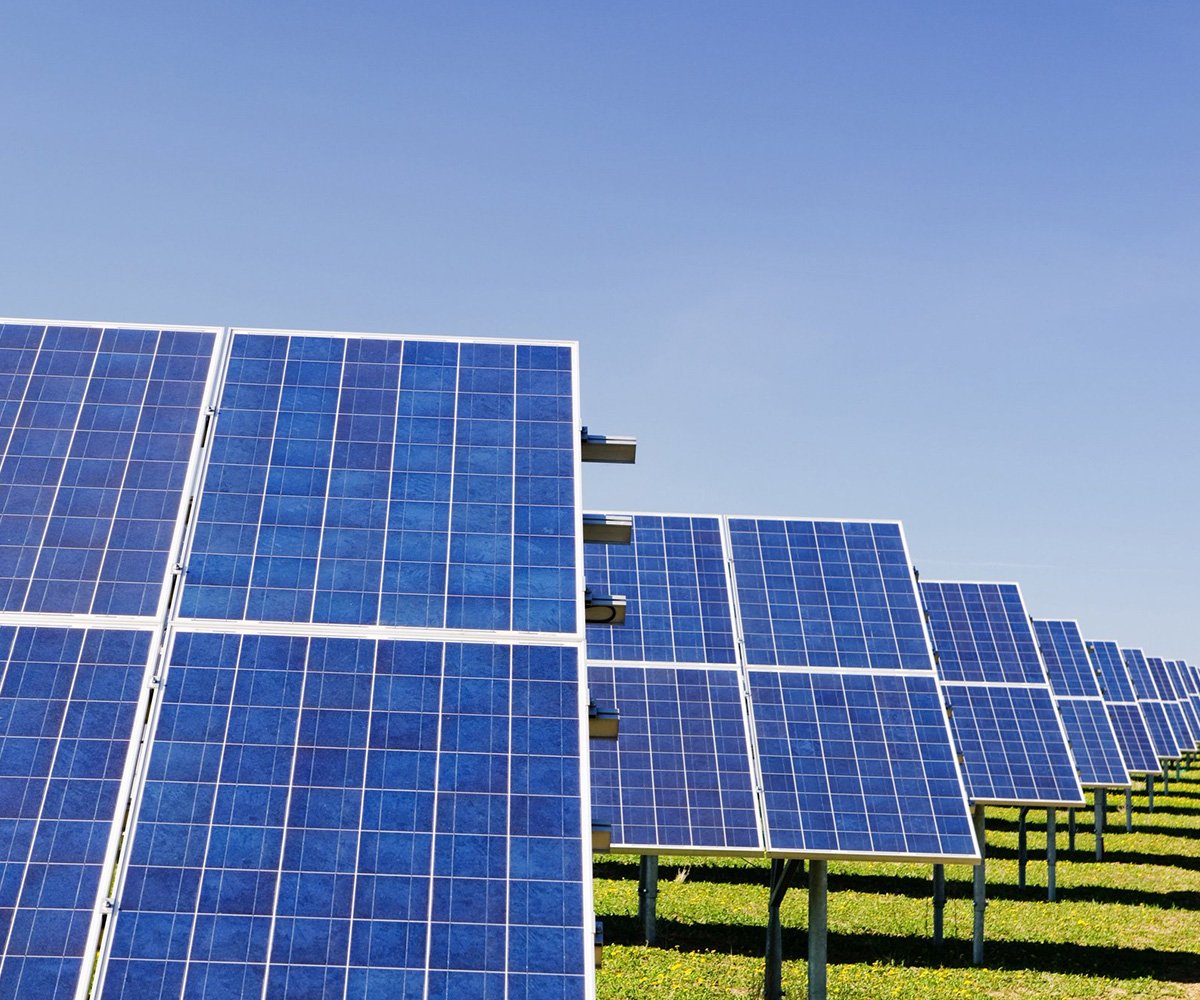

India – As India accelerates its ambitious journey toward renewable energy targets, the DS Group has reinforced its strategic commitment to the Solar Engineering, Procurement, and Construction (EPC) sector. By prioritizing high-standard energy solutions and robust project management, the company aims to play a pivotal role in the nation’s clean energy transition.

Commitment to Quality and Innovation

In a sector often defined by the speed of deployment, DS Group is distinguishing itself through a steadfast focus on quality and technical excellence. According to the company’s recent statement, their operational philosophy is built on delivering high-standard energy solutions that do not compromise on safety or longevity.

The company has outlined a comprehensive approach to solar infrastructure, emphasizing “safe structures” and “sustainable development.” This focus ensures that solar assets are not only efficient upon commissioning but remain durable and reliable throughout their lifecycle.

Reliable Project Management and Timely Execution

One of the critical challenges in the Indian infrastructure sector is project delay. Addressing this, DS Group has positioned “reliable project management” and “timely execution” at the core of its value proposition. By streamlining workflows and utilizing advanced engineering practices, the group aims to deliver projects on schedule, ensuring clients receive immediate value from their energy investments.

Contributing to a Greener India

The company’s vision aligns seamlessly with India’s national goals for carbon reduction and green energy adoption.

“Our goal is to make a leading contribution to India’s clean energy transition,” the company stated. By integrating sustainable development practices into their EPC services, DS Group is looking to empower clients to reduce their carbon footprints effectively.
Industry Impact

As the demand for renewable energy grows among commercial and industrial sectors, the role of specialized EPC players becomes crucial. DS Group’s emphasis on combining technical precision with safety standards positions them as a key enabler for businesses looking to adopt solar energy.

The group’s strategy reflects a maturing solar market in India, where the focus is shifting from mere capacity addition to the creation of high-quality, long-lasting energy assets.
Solar isn’t just for roofs anymore. It’s for anything that moves.

For the last decade, the solar industry had a weight problem. Traditional panels are encased in aluminum and heavy tempered glass, weighing roughly 40 lbs per unit. You couldn’t put them on just anything.

That era ended this quarter.

Following the breakthrough announcement from the Munich Solar Trade Fair last week, the biggest news of December 2025 is the mass-market arrival of “Solar Fabric” (ultra-thin-film photovoltaics). This isn’t the low-efficiency flexible plastic of the 2020s—this is a durable, high-yield energy harvesting wrap that is transforming the automotive and logistics industries.

Here is the update on the technology that is turning our vehicles into moving power plants.

1. The “Solar-Skin” EV Revolution

In 2023, a few concept cars had solar roofs that added maybe 3 miles of range a day. It was a gimmick.

Fast forward to December 2025: Major EV manufacturers have announced that their 2026 lineups will feature Full-Body Solar Integration. Using the new printed “Solar Fabric,” the hood, roof, and trunk of the car act as active solar collectors.

The Stats:

  • Old Tech: Added ~3 miles of range per day.

  • Dec 2025 Tech: Adds 30–45 miles of range per day in sunny climates.

For the average commuter driving less than 30 miles a day, this means never plugging in. The concept of “Range Anxiety” is being replaced by “Charging Amnesia”—forgetting when you last had to plug your car in.

2. Retrofitting the Supply Chain

The most exciting news isn’t about new items, but old ones. A major logistics company (think Amazon or FedEx scale) just announced a massive fleet retrofit this month using Adhesive Solar Wraps.

Because this new solar tech is lightweight and flexible, it can be applied like a decal to the tops of semi-trailers and delivery vans without reinforcing the vehicle’s structure.

  • The Impact: Delivery trucks are now powering their own lift gates and refrigeration units entirely off solar energy harvested while driving, cutting diesel idling usage by 80%.

3. Disaster Relief and “Roll-Out” Power

In a moving humanitarian update, NGOs operating in remote regions have begun deploying “Solar Carpets” this month.

Instead of trucking in heavy generators and fuel, response teams are rolling out spools of photovoltaic fabric. These mats can be laid out over uneven ground, tents, or rubble to provide instant kilowatt-scale power for medical equipment and communications. It is lighter to ship, impossible to shatter, and sets up in seconds.

4. A Note on Efficiency vs. Utility

It is important to note the difference between the Tandem Silicon panels (mentioned in our last article) and this new Solar Fabric.

  • Tandem Silicon: 35% Efficiency. Heavy. Best for homes and solar farms.

  • Solar Fabric: 24% Efficiency. Lightweight. Best for vehicles, curves, and weight-sensitive structures.

We are seeing a divergence in the market. We no longer have a “one size fits all” solar panel. We have specialized tools for specialized jobs.

The Outlook for 2026

As we close out 2025, the definition of a “solar panel” has officially been disrupted. It is no longer just a rigid black rectangle on a roof. It is a surface material—a fabric, a skin, a wrap.

In 2026, look for this technology to move to consumer goods. Solar-wrapped backpacks, tents, and awnings that actually charge devices quickly are just around the corner.

The Solar Revolution Just Hit Warp Speed

If you have been waiting to switch to solar because you thought the technology hadn’t “peaked” yet, your wait is officially over.

This week, at the Global Clean Energy Summit in Kyoto, a consortium of major manufacturers confirmed what industry insiders have been whispering about for months: Commercial-grade Perovskite-Silicon Tandem panels have officially stabilized and are entering mass production with an efficiency rating of over 35%.

For the past 20 years, we’ve been inching forward with standard silicon panels hovering between 19% and 22% efficiency. Today, the game has fundamentally changed. Here is everything you need to know about the biggest solar news of 2025.

1. The “Tandem” Takeover

For decades, panels were made of a single layer of silicon. The problem? Silicon is only good at absorbing red light waves. It lets high-energy blue light waves pass right through or turn into waste heat.

The new 2026 model panels (shipping this month) utilize Tandem Cell Technology. They layer a synthetic material called Perovskite on top of traditional silicon.

  • The Perovskite layer catches the blue spectrum.

  • The Silicon layer catches the red spectrum.

The Result: A standard residential roof that used to generate 6kW of power can now generate nearly 9kW in the same amount of space, without requiring a larger footprint. For homeowners with small roofs or partial shading, this is the miracle cure we’ve been waiting for.

2. The “Durability Dilemma” is Solved

The only reason we didn’t have these panels in 2023 or 2024 was durability. Early Perovskite degraded quickly in rain and humidity.

However, the major announcement this December is the development of “Self-Healing Encapsulation.” Manufacturers have developed a glass-glass sealing technique that protects these sensitive layers for a guaranteed 30 years. This puts the lifespan of these high-efficiency panels on par with the rugged silicon panels of the past.

3. Solar Windows are Finally Clear (Literally)

While the Tandem panels are grabbing headlines for efficiency, the “invisible” solar market has quietly matured.

This month, major architectural firms announced that Transparent Photovoltaic Glass is now price-competitive with standard triple-pane windows. In 2024, these windows had a slight orange or blue tint. The Dec 2025 update? They are virtually indistinguishable from standard glass to the human eye.

This means skyscrapers being built in 2026 will essentially be vertical power plants, harvesting energy not just from the roof, but from thousands of square feet of glass siding.

4. Price Update: Efficiency Up, Soft Costs Down

You might think higher tech means higher prices. Surprisingly, the total cost of installation is dropping.

Why? Power density.
Because these new panels are so powerful, you need fewer of them to run a house.

  • Fewer panels mean less racking equipment.

  • Less wiring.

  • fewer labor hours on the roof.

While the per panel price is higher than the old tech, the total system cost for a 100% offset system has dropped by roughly 15% compared to December 2024 prices.

What This Means for Homeowners in 2026

If you install solar in the coming year, you are no longer buying “alternative” energy. You are buying the most efficient power source on the planet.

With the release of the 35% efficiency commercial panels and the integration of solid-state home batteries (which became the standard earlier this year), the concept of the “Grid-Independent Home” is no longer a survivalist fantasy—it is a standard suburban reality.

The verdict? The sun is shining brighter than ever on the solar industry.